SP&MH: Common Pedagogies from the Territories

COMUNAL Arquitectura
SP&MH: Common Pedagogies from the Territories
Applications Close July 20, 2026Apply now

COMUNAL Arquitectura

SP&MH: Common Pedagogies from the Territories

“Social Production and Management of Habitat (SP&MH): Common Pedagogies from the Territories” is a collaborative, reflective, and affective learning process that aims to explore emancipatory ways of researching and knowing based on shared lived experiences with others as a source of common knowledge to transform our worlds. We conceive of the course as a series of encounters intended to prefigure other possibilities for existence: other ways of feeling, thinking, and doing aimed at increasing the potency of our collective action and creative autonomy for the liberation of ways of inhabiting. The encounters seek to confront the hegemony of knowledge (colonial, racist, patriarchal, and capitalist) that disauthorises community conviviality and relationality as valuable epistemologies that arise from the territories.

Emancipatory PedagogiesConvivialityLiberation of InhabitingSocial Production of Habitat
SP&MH: Common Pedagogies from the Territories

Dates & Times

August 3: 11AM–1:30PM EST

August 10: 11AM–1:30PM EST

August 17: 11AM–1:30PM EST

August 24: 11AM–1:30PM EST

August 31: 11AM–1:30PM EST

September 7: 11AM–1:30PM EST

LocationOnline
Cost$0
Age18+
LanguageSpanish
MaterialsLaptop with Wi-Fi
Accessibility SupportsClosed Captioning
Max Students15

Course Description

This pedagogical space began as an epistemic curiosity to learn about the experiences that have transformed us, and what we want to transform from the ethical-political stance of SP&MH, which has led us to collaborate on self-managed projects with inhabitants and organized groups in diverse geographies. The research process has led us to walk with questions that—when organized and categorized—function as a complex and relational system composed of six reflective constellations: recognizing, learning, living together, imagining, rehearsing, and harvesting. We convene participants to research(us) and transform(us) together, using the questions that comprise each reflective constellation as pedagogical tools, with the experiences, territories, reflections, and affections of those who will participate in the encounters as our common horizon. The course will integrate conversations, readings, critical-affective mapping, dynamics of reflection, speculative writing, and digital archiving for the collective construction of knowledge.

Week 1

Recognizing

How do we conceive of ourselves (individually and collectively)? / How do we wish to, or how can we participate in the processes and collectives of which we are a part? / What are the expectations for transformation and liberation in the territories we inhabit? And, what are our own? / What processes, relationships, and forms of care can we truly sustain together? / What are the geometries of power present in our collective structures? / What forms of violence do we perpetrate without even realizing it? / What do we need to unlearn and transform in order to explore other ways of imagining and living together? / How is our life story transformed by collaborating with other life stories?
Week 2

Learning

How do we learn other ways of learning based on the common good and the care of life? / In what ways do we learn-teach in the territories we inhabit? / What kind of bonds and affective relationships do the ways of learning we rehearse produce? / How do we learn-teach by reflecting, systematizing, and theorizing from shared experiences? / How can experiences help to produce new knowledge that contributes to the liberation of ways of inhabiting, to rehearsing new emancipatory tools, to incorporating other ways of being, and to transforming ourselves collectively? / What is the relationship between our ways of learning-teaching and caring(us), imagining(us), and transforming(us)? / What lessons can we incorporate from conflicts in our territories?

Week 3

Living Together

In what ways do the bonds and relationships we build through conviviality transform our emancipatory processes? / How do the experiences we have during collaborative processes relate to our actions and the affections we have towards them? / Can we design relationships aimed at strengthening bonds through sharing, deciding, cooperating, and making together? / What ways of living-with others increase our potency for collective action, autonomy, and self-management? / How do we build trust and honesty in the bonds we weave?

Week 4

Imagining

How can we prefigure, imagine, and design other possible futures, rehearsing presents that enable the collective liberation of inhabiting? / What do we understand by participation, cooperation, and collaboration within our community spheres? / Is it possible to imagine more livable worlds from mutual recognition (limits, capacities, and rhythms)? / How can we rehearse presents that honor both the needs-desires of all parties and the shared response-ability for caring for life?

Week 5

Rehearsing

How do we rehearse together liberating ways of living, imagining, and learning? / How do we transform the potency of our collective action from the convivial and relational experiences we live? / What convivial tools do we require to learn to move from survival to conviviality? / How can we practice flexible, living, and adaptive structures that allow us to sustain the changes we desire in our territories? / When does a transformation strategy cease to be strategic? / How do the diverse ways of feeling, thinking, and making worlds allow us to move from resistance (a coalition of the discontented) to collective liberation and emancipation?

Week 6

Harvesting

What lessons have we harvested and incorporated during the collective construction of reflections in these pedagogical encounters? / What other reflective constellations open the way for us to formulate new questions regarding our ways of researching(us), learning(us), and transforming(us)? / What convivial and relational experiences in these encounters have enabled us to recognize ourselves in the process of researching-learning together? / How can we continue learning, living together, imagining, and rehearsing other ways of socially producing our habitat?

Teacher(s)

Teacher image

COMUNAL Arquitectura

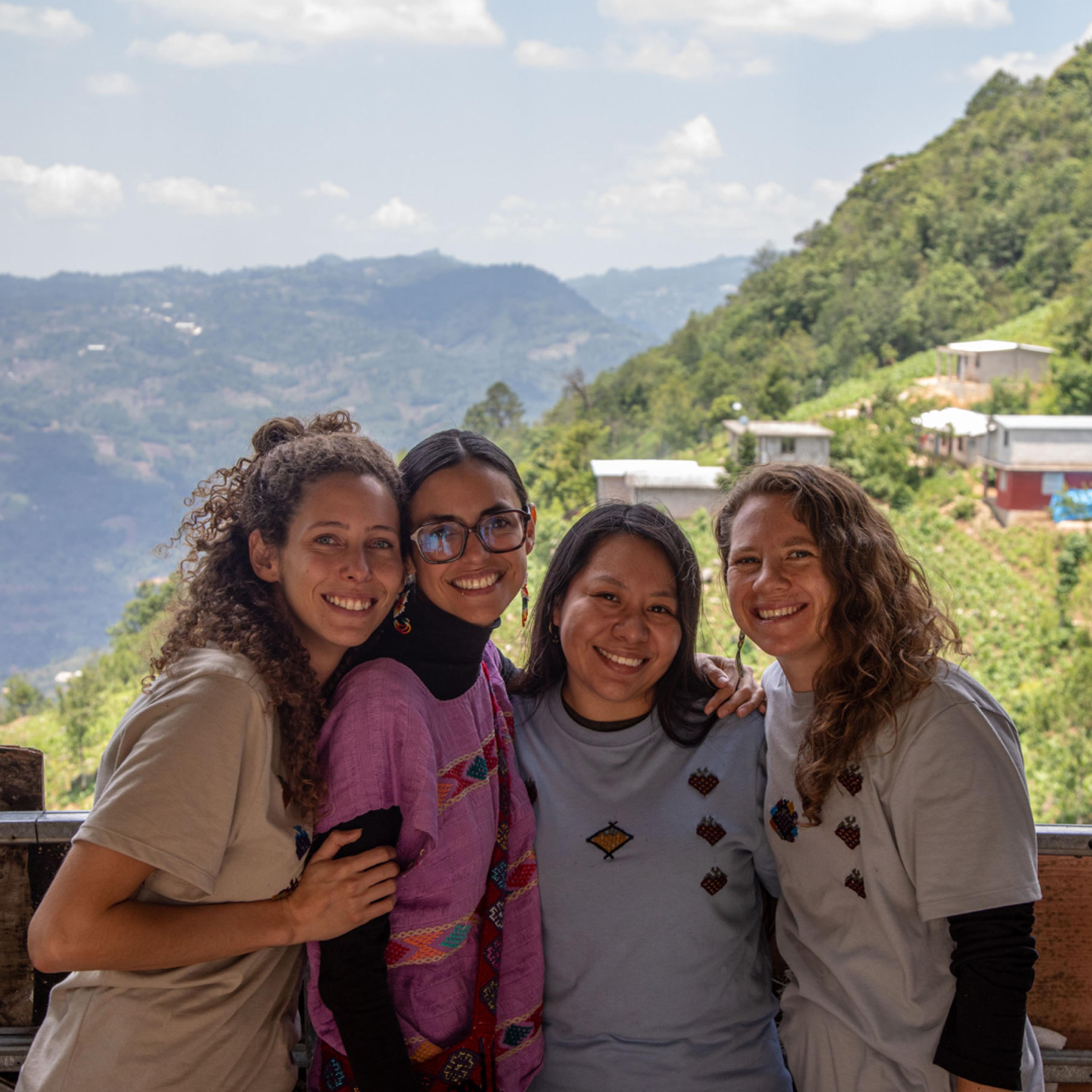
We are a working group made up of four women who come from different geographies. We are moved to collaborate with inhabitants, organized people and collectives from different territories with the common objective of design other ways of inhabiting[us], other possible worlds based on mutual aid, the exercise of autonomy and the search for interdimensional justice. Our work seeks to contribute to the liberation of inhabiting, using design as a convivial tool that enables the care of life in its multiple manifestations and collective emancipation.

www.comunaltaller.com

More Courses

Island Futures

Letters from Urban Utopias

Afro-Brazilian Spatial Culture: Foundations & Ecologies of the Possible